
HVAC & Health
Is Your Mini-Split Making You Sick? The Surprising Truth for Greater Victoria Homeowners
Ductless mini-split heat pumps have become the go-to comfort solution across Greater Victoria. They provide highly efficient heating during our damp Vancouver Island winters and crisp cooling during our increasingly hot summers.
However, there is an invisible downside to these sleek, wall-mounted systems. When poorly maintained, mini-splits can collect moisture that breeds mold, bacteria, and biofilm, leading to respiratory issues, headaches, allergic reactions, and even a condition known as “mini-split lung.”
Because mini-splits are self-contained zones that recirculate indoor air directly, neglected units can harbor significant amounts of microbial contaminants. At RedBlue Heating & Refrigeration, we believe that proper maintenance is not just about extending the lifespan of your equipment—it is about protecting your family’s health.
Common Health Symptoms Associated with Dirty Mini-Splits
Many homeowners do not immediately connect their physical symptoms to their heating and cooling systems. If you notice a shift in your indoor well-being after installing or running a ductless system, your indoor air quality could be compromised.
Keep an eye out for these persistent symptoms:
- Respiratory Irritation: Frequent coughing, sneezing, sore throats, or unexplained congestion while indoors.
- Worsening Allergy and Asthma Symptoms: Sudden flare-ups or heightened sensitivity to airborne irritants.
- Headaches and Fatigue: Chronic, low-grade headaches or a feeling of lethargy that mysteriously clears up when you leave the house.
- “Mini-Split Lung”: A form of hypersensitivity pneumonitis where breathing in concentrated mold spores causes severe, pneumonia-like respiratory distress.
Why Mini-Splits Become Breeding Grounds for Mold and Bacteria
To understand why mini-splits are uniquely prone to tracking contaminants, you have to look at how they manage moisture.
The Ideal Microclimate
When operating in cooling or dehumidification mode, the indoor evaporator coils pull moisture out of the air. This condensation drips into an internal drain pan and flows out through a condensate line.
The Accumulation of Biofilm
Because the internal components of a mini-split rarely dry out completely during high-use seasons, fine dust particles mix with the standing water. Over time, this creates a thick, jelly-like substance known as biofilm.
Direct Airflow Distribution
Unlike traditional central systems where air travels through a vast network of hidden ducts, a mini-split blows air directly over its own internal fan wheel and coils right into your living space. If those internal components are coated in mold or bacteria, those microorganisms are distributed straight into your breathing zone.
Our local climate in Greater Victoria compounds this issue. Our long, humid shoulder seasons mean systems alternate frequently between heating, cooling, and sitting idle, giving mold the perfect window to thrive in the damp dark.
Effective Maintenance Strategies to Protect Your Health
Fortunately, preventing your heat pump from impacting your health is entirely manageable with consistent care. A dual approach of regular homeowner upkeep and scheduled professional deep cleaning will keep your air pristine.
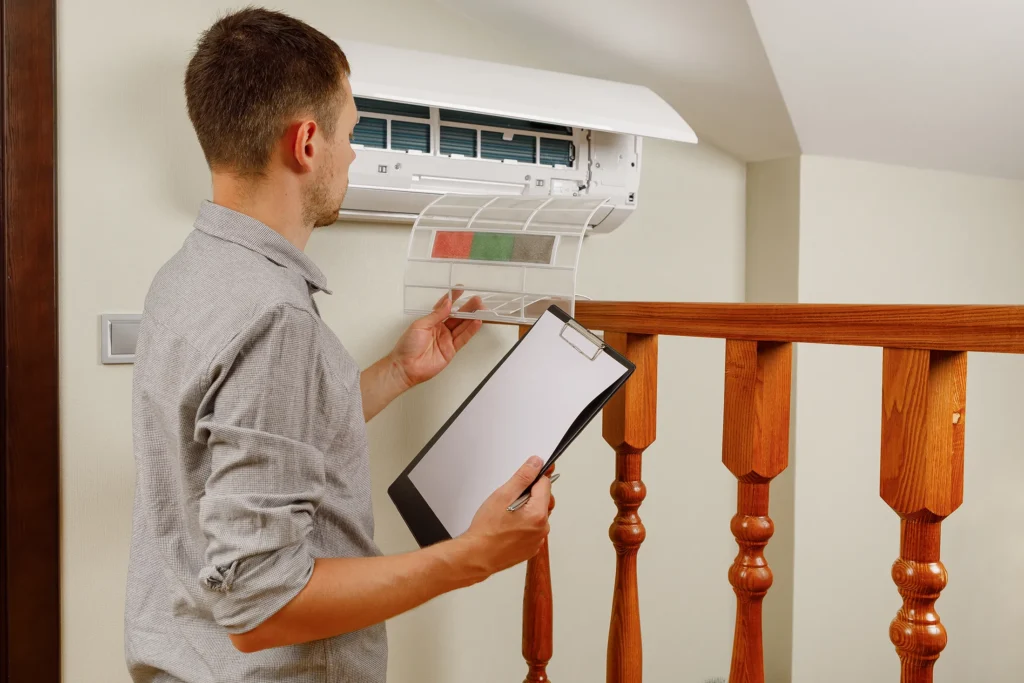
- Clean Filters Monthly: Mini-split filters are thin and fill up quickly with dust, pet dander, and hair. Check and wash your mesh filters at least once a month to prevent debris from bypassing the filter and settling onto the wet coils.
- Book Professional Deep Cleanings Twice Yearly: Standard dust-wiping is not enough. Professional technicians use specialized pressure-washing bags, coil-cleansing solutions, and anti-microbial treatments to safely flush out hidden mold, biofilm, and clogged drain lines without damaging your walls.
- Keep External Zones Clear: Ensure the outdoor condenser unit is completely free of coastal damp leaves, garden debris, and overgrown brush to maintain proper airflow and pressure balance throughout the system.
Frequently Asked Questions
Can mini-split contamination affect pets differently than humans?
Yes. Pets often spend significantly more time close to the floor where air drafts circulate, and their smaller lung capacities can make them highly sensitive to airborne mold spores and allergen build-up.
Are certain brands of mini-splits less prone to contamination?
Premium brands like Mitsubishi, Daikin, and Fujitsu are engineered with advanced multi-stage filtration systems and specialized self-cleaning coatings on the coils. However, no brand is immune to neglect. Routine maintenance remains the ultimate deciding factor in keeping any system clean.
How do I know if my symptoms are from a dirty mini-split or seasonal allergies?
Seasonal allergies usually follow outdoor pollen counts and tracking weather patterns. If your itchy eyes, congestion, or coughing spikes specifically when you sit near a running indoor head unit—or if your home smells a bit musty when the air turns on—your mini-split likely needs a deep clean.
Breathe Cleaner Air with RedBlue Heating & Refrigeration
You shouldn’t have to sacrifice your health for a comfortable home climate. Investing a small amount of time into proper maintenance ensures you protect both your premium HVAC equipment and your household’s respiratory well-being.
If your ductless heat pump is overdue for a clean, or if you want to ensure your indoor air quality is at its peak, the local team at RedBlue Heating & Refrigeration is here to help.
Contact RedBlue Heating & Refrigeration today to book a comprehensive mini-split inspection and professional sanitization service for your Greater Victoria home.
Need a Checkup?
Call RedBlue today and book a maintenance for your HVAC unit to stay on top of it.
Related Article

Is Your Mini-Split Making You Sick? The Surprising Truth for Greater Victoria Homeowners
September 24, 2026
No Comments
The Ultimate Guide to Residential HVAC in Greater Victoria & Sooke: Comfort, Efficiency, and Maximum Rebates
September 18, 2026
No Comments

Furnace vs. Heat Pump: Which Heating System Makes Sense for Victoria’s Climate?
September 3, 2026
No Comments

The Greater Victoria Guide to Clean Indoor Air: How to Fight Allergies, Dust, and Wildfire Smoke at Home
August 19, 2026
No Comments