
Top 5 Reasons Your AC is Freezing Up in a Victoria Summer
Summer on southern Vancouver Island is spectacular, but it can also push your home cooling system to its absolute limits.
While Greater Victoria enjoys a relatively mild maritime climate, peak July and August heatwaves bring a hidden challenge for home comfort: high coastal humidity.
When hot, moisture-laden air hits your air conditioning system, it can trigger a frustrating and surprisingly common mechanical failure: a frozen evaporator coil.
If you notice a drop in airflow, ice building up on your outdoor brass valves, or a literal block of ice inside your indoor furnace or air handler closet, your system is crying for help.
Below, RedBlue breaks down the top five technical reasons why air conditioners freeze up during a Victoria summer, how our unique coastal environment plays a role, and exactly what you need to do to fix it.
1. Restricted Airflow (The Most Common Culprit)
An air conditioning system does not actually “create” cold; it removes heat and moisture from your indoor air. To do this safely, a steady, high-volume stream of warm indoor air must constantly pass over the freezing cold evaporator coil.
If that airflow is choked, the refrigerant inside the coil drops below freezing temperatures. The natural condensation on the outside of the coil instantly turns to ice. This creates a compounding effect: the ice blocks more air, causing the system to freeze even faster.
Common Airflow Choke Points:
- Clogged Air Filters: Dust, pet dander, and local seasonal allergens quickly coat standard pleated filters, strangling your system’s air intake.
- Blocked Return Vents: Furniture, heavy drapes, or closed doors can accidentally cut off the air supply your system needs to breathe.
- Undersized or Damaged Ductwork: Crushed flex-ducts or poorly engineered layouts restrict static pressure, starving the evaporator coil of warm air.
2. Low Refrigerant Charge or System Leaks
There is a common misconception that air conditioners “consume” refrigerant over time. In reality, your AC is a sealed system. If your refrigerant levels (such as R-410A or newer eco-friendly alternatives) are low, it means your system has a leak.
Counterintuitively, less refrigerant makes the coil colder, not warmer.
When a system loses pressure due to a leak, the remaining liquid refrigerant expands too quickly and drops well below freezing. As the humid Victoria air passes through, it instantly glazes the coil in a layer of frost that quickly hardens into solid ice.
Signs of a Refrigerant Leak:
- A persistent hissing or bubbling sound near the indoor or outdoor unit.
- The system runs continuously for hours without hitting your thermostat’s target temperature.
- Lukewarm air blowing out of your supply registers.

3. High Coastal Humidity Overloading the Evaporator
Victoria’s proximity to the Pacific Ocean means our summer air carries a significant latent heat load (moisture content). Your AC pulls double duty: it lowers the air temperature and acts as a heavy-duty dehumidifier.
When indoor humidity levels are exceptionally high, often exacerbated by cooking, showering, or poorly sealed crawlspaces—the volume of water dripping off your coil increases dramatically. If your system’s fan speed is set incorrectly, or if the system is slightly oversized for the home, the coil will rapidly condense more water than the ambient airflow can warm up. The result is a sudden, moisture-driven freeze-up during peak humidity days.
4. Mechanical Blower Motor or Fan Failures
Even if your air filter is pristine, the air cannot move without a functioning blower fan. The indoor blower motor is responsible for actively pushing warm household air across the coil.
If the blower motor capacitor fails, the motor burns out, or the fan belt slips, the air stops moving entirely. Within minutes, the static temperature around the evaporator coil plummets, causing any residual condensation to lock the entire unit in ice.
What to Listen For:
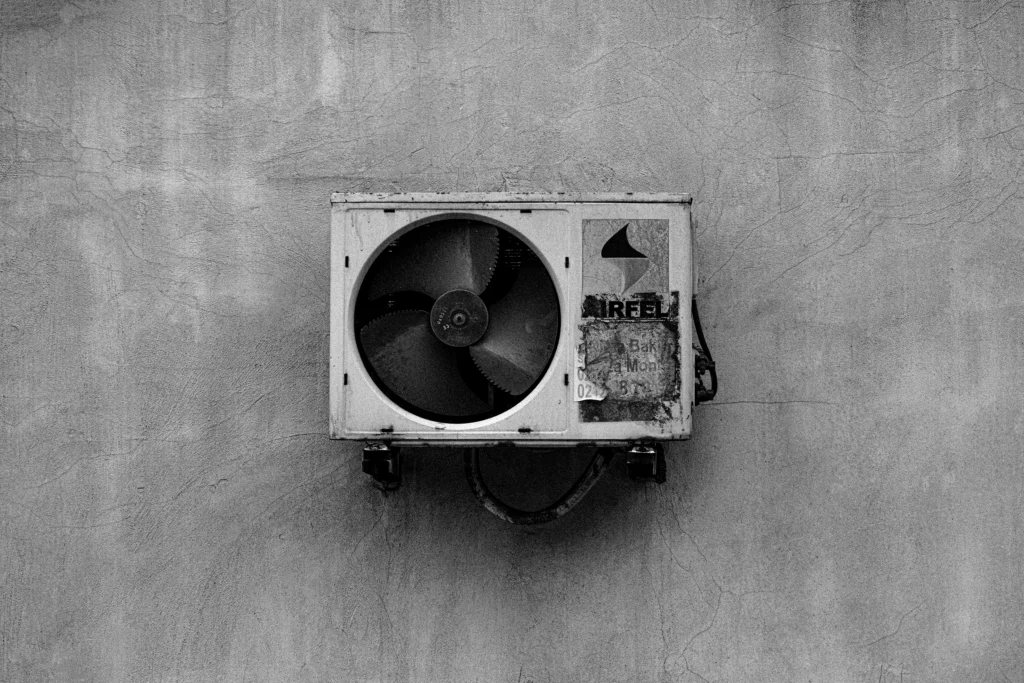
If you can hear your outdoor condenser unit humming in the yard, but you don’t hear the familiar rush of air coming from your indoor vents, your blower fan has likely failed.
5. Dirty Coils and Neglected Maintenance
Your indoor evaporator coil is constantly damp during operation, making it a natural magnet for microscopic dust particles that bypass your air filter. Over time, a thin layer of grime forms over the aluminum fins of the coil.
This dirt acts as an insulating barrier, preventing the indoor air from transferring its heat to the cold refrigerant flowing inside the copper lines. Because the heat transfer is blocked, the refrigerant remains too cold, and the damp grime quickly acts as a structural anchor for ice crystals to grow and multiply.
What to Do Right Now: The 3-Step Emergency Melt Procedure
If your system is frozen, do not simply crank down the thermostat. This will overwork your compressor and can cause permanent, expensive mechanical failure. Follow these steps immediately:
- Turn the AC Off: Flip your thermostat setting from “Cool” to “Off” to stop feeding liquid refrigerant to the frozen coil.
- Switch the Fan to “On”: Change your fan setting from “Auto” to “On”. This forces the warm room-temperature air to blow continuously across the ice, safely accelerating the melting process.
- Monitor the Condensate Drain: Keep a close eye on your indoor unit. As dozens of pounds of ice melt, your drain pan and condensate line will be put to the test. Ensure water isn’t overflowing onto your floors or drywall.
Prevent Future Freeze-Ups with RedBlue
Once your system has completely thawed (which can take anywhere from 2 to 24 hours), it is critical to diagnose the root cause before turning the cooling back on.
Running a system with an active leak or a failed motor can cause catastrophic liquid slugging, destroying your compressor entirely.
At RedBlue, we serve homeowners across Greater Victoria, Langford, Saanich, and the Peninsula. Our licensed, local technicians carry advanced diagnostic tools to locate microscopic refrigerant leaks, test blower motor electrical components, and perform precision coil cleanings to ensure your system survives the summer heatwaves efficiently.
Related Article
The Ultimate Guide to Residential HVAC in Greater Victoria & Sooke: Comfort, Efficiency, and Maximum Rebates
September 18, 2026
No Comments

Storm Season Ready: Choosing the Right Backup Generator for Your Vancouver Island Home
September 16, 2026
No Comments
Furnace vs. Heat Pump: Which Heating System Makes Sense for Victoria’s Climate?
September 3, 2026
No Comments

The Greater Victoria Guide to Clean Indoor Air: How to Fight Allergies, Dust, and Wildfire Smoke at Home
August 19, 2026
No Comments